

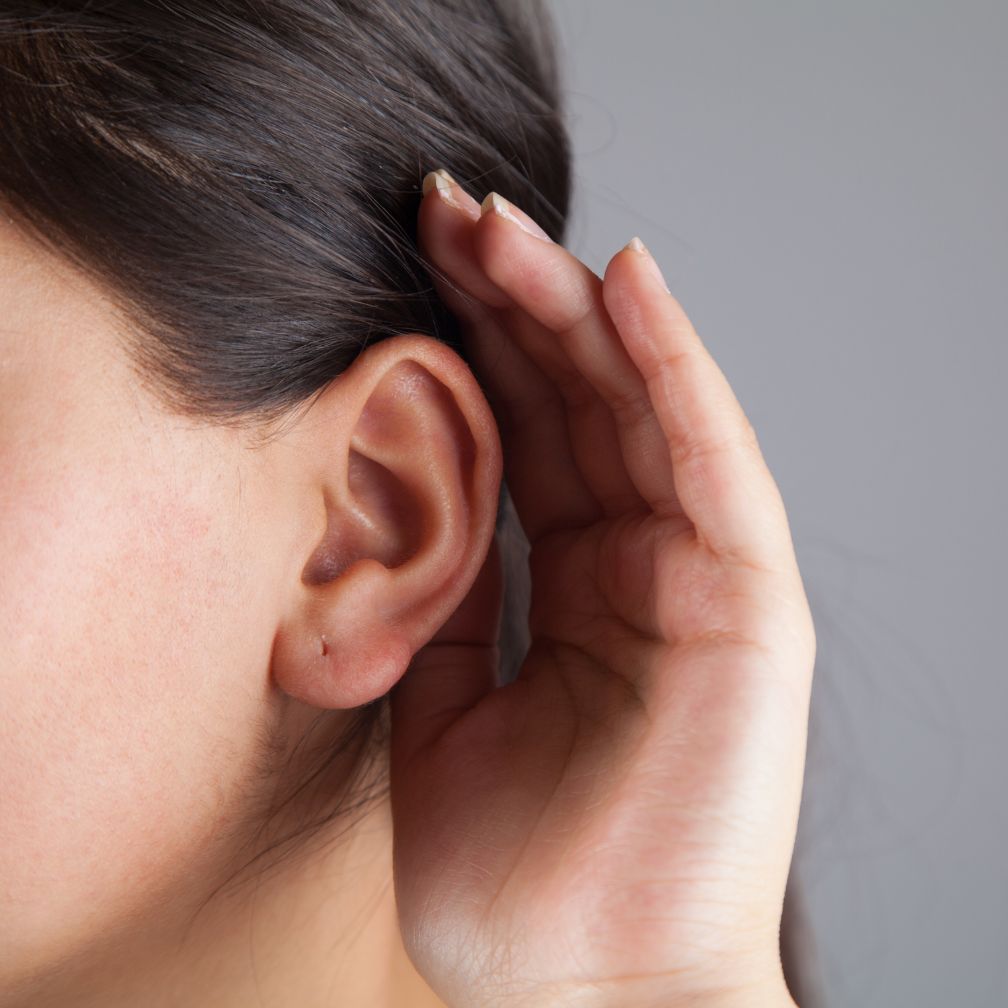
Have you noticed an unusual auditory sensation that mimics baseline white noise or a steady breeze in your ears? Why can’t anyone else hear it? You are not inventing these symptoms; the sensation is entirely real.
Fortunately, your symptoms do not point to “phantom ring syndrome,” a psychological habit among heavy smartphone users who mistakenly believe their device is vibrating or ringing in silence.
More than likely, you are experiencing a very common peripheral vestibular and auditory condition known as tinnitus. And yes, what you’re hearing is real, and there are some things that can make tinnitus worse.
While this background static is present, you can generally still decode the words of those around you. Instead, it functions as an omnipresent layer of sensory noise transposed directly on top of your standard daily hearing.
Let’s look at where this white noise comes from, what it is, and what you may be able to do to reduce or get rid of it.
What is tinnitus & why do I hear this white noise in my head?
From an audiological standpoint, tinnitus is almost always a direct proxy for localized hearing loss. It is uniquely defined by a steady or variable acoustic signal that registers on top of everyday conversations. Depending on individual pathology, this subjective sound can remain mild enough to ignore during active hours. Or you may be saying, this white noise in my head feels deafening, threatening to take my sanity.
You’ve probably tried to explain to people what you’re experiencing, but this form of hearing loss is difficult for people to understand if they’ve never experienced it for themselves.
It can feel deeply disorienting to process an intense internal buzz that leaves absolutely no measurable trace in the physical room. This paradox leads many to worry if they are suffering from a central mental delusion or cognitive misfire. You may find yourself asking how a silent hum can completely disrupt your concentration and impair your social interactions. Or completely sabotage your natural ability to fall into a deep, restorative sleep cycle?
Nocturnal Amplification: What Happens When Ambient Sound Drops
You’ve probably noticed that the quieter it is, the worse your tinnitus gets. That’s because the noise you hear in your ears does not have to compete with any other sounds – for example, most people keep their bedrooms completely silent while they sleep at night. They operate without a television background feed, avoid running any radio streams, and eliminate all ambient audio. Furthermore, being left alone with your internal thoughts allows the unprompted ear static to command your undivided attention, initiating an anxious loop that makes the volume seem significantly louder. Regardless of whether your specific symptoms involve low-frequency hums or high-pitched squeals, a perfectly silent evening environment provides the ideal clinical conditions for tinnitus to dominate your focus.
Differentiating Your Symptoms: Is a Rushing Wind Sound Actually Tinnitus?
While explaining the condition to normal-hearing peers is a major hurdle, comparing notes with another person who has tinnitus can create unexpected doubt. They might describe a totally different frequency matrix or tonal texture, which easily leads you to conclude that your wind-like sound must be an entirely separate disease.
However, statistically speaking, your symptoms are almost certainly a manifestation of the exact same condition. The disorder presents with remarkable variety, shaping its subjective sound signature differently from one ear network to the next. These include, but aren’t limited to, hearing:
- The harsh hiss of old-fashioned television static
- A resonant, steady internal humming tone
- The constant drone of a swarm-like buzzing noise
- A persistent, thin ringing frequency that cuts through silence
- A rhythmic, low-end physical thumping sensation
- A flat, continuous telephonic dial tone
In almost all instances, you are completely isolated in your perception of the tinnitus-induced white noise. Consequently, if you request that your family doctor physically verify the noise during an office visit, they lack the tools to do so. The practitioner simply has to trust your diagnostic description, as there is no physical signal for them to measure.
This lack of objective testing can easily make a patient feel completely invalidated when consulting a general doctor who lacks specialized understanding of ear pathways.
To illustrate, an industrial steelworker named Thomas shared his story: “The moment that intense ringing initiated, I consulted my family physician. While the doctor did state that it might be tinnitus, he didn’t really seem to understand how debilitating the noise was. He spoke about it like it wasn’t really there. He assumed I could easily tune out the static and offered absolutely no management strategies or medical next steps.’
Consulting a dedicated hearing professional effectively addresses this communication breakdown and unlocks access to advanced medical solutions. Sometimes the sound itself can offer clues as to how to treat it.
Well, it’s really more of a whooshing sound in my ears
What makes it even harder to describe this noise to a doctor is the fact that there are so many different ways tinnitus can manifest itself. For example, if you hear a whooshing sound or a thumping sound in your ears, which is then followed by a steady series of beats that mimics your pulse, you may actually have a rare type of tinnitus called pulsatile tinnitus.
The good news is that pulsatile tinnitus can be treated more effectively than regular tinnitus since it’s usually caused by one or more health problems, like high blood pressure or issues with your arteries.
Physically, the rushing noise can be created by changes in blood velocity through compromised or compressed pathways in the skull, resulting in an objective bruit. It is absolutely imperative to have this symptom evaluated by a specialist, as this mechanical murmur can occasionally warn of severe cardiovascular blockages that precede an acute stroke or seizure.
The Auditory Reality of Pulsatile Symptoms: External Verification Options
Tinnitus is a genuine – and quite annoying – condition. Though standard variations lack external markers, specific cases of objective pulsatile tinnitus allow an experienced otolaryngologist to deploy tools like an acoustic stethoscope to physically monitor the exact same whooshing you perceive. Remember, this external diagnostic confirmation is exclusively possible within vascular profiles, which occur far less frequently than standard subjective ear ringing.
The Primary Triggers of Tinnitus: Understanding Sensory Damage
The leading catalyst for permanent sensorineural ringing is a timeline of consistent exposure to acoustic trauma or loud environments. This explains why the disorder is highly prevalent among professional musicians, concertgoers, and industrial laborers who operate within loud environments for consecutive hours over several years.
Several specific employment sectors generate high enough decibel baselines to directly induce permanent tinnitus, including:
- Industrial Manufacturing – Spending an eight-hour shift surrounded by heavy mechanical equipment inflicts severe, cumulative strain on your delicate auditory architecture. Compounding the physical decibel load, industrial environments are inherently high-stress, a psychological variable that actively accelerates and worsens central tinnitus perception. For instance, operators positioned near a pneumatic riveter face extreme hazards, as these tools blast over 125 decibels—a threshold capable of inducing instant, irreversible cochlear death and violent tinnitus.}
- Commercial Agriculture – Do not blame your symptoms on a standard rooster call. While a crowing rooster registers at a surprising 90 decibels, contemporary agricultural environments embed machinery that is vastly more destructive to human ears. Industrial tractors, heavy combine harvesters, automated cherry-pickers, and vacuum milking lines generate continuous, extreme noise pollution. Even routine maintenance tasks pose a threat; a standard workshop table saw easily exceeds 85 decibels, a level that permanently damages hearing cells over a long timeline of exposure.}
- Aviation – A commercial jet propulsion system generates a staggering 140 decibels of acoustic energy, even from a distance of a hundred feet. While professional aviators generally wear protective communication headsets, pilots of small or regional aircraft operate right next to the engine firewall. No passive or active headset is completely capable of shielding the inner ear from this intense, vibrating sound pressure, meaning your hard-earned flight hours are simultaneously causing gradual, permanent sensorineural damage.}
- Highway Patrol Operators – While millions ride motorcycles for recreation, any professional assignment that requires operating a high-displacement bike for an entire shift places you at extreme risk for occupational hearing loss and secondary tinnitus. The identical acoustic risk applies to the prolonged operation of snowmobiles or commercial jet skis—though very few workers ride these vehicles for a living unless they occupy a highly unique and exciting role in outdoor law enforcement.}
- Nightlife and Hospitality Personnel – To fulfill your duties, you must accurately capture a patron’s drink order from across a crowded room. However, the ambient acoustics in modern nightclubs are set so high that discerning speech becomes a massive physical struggle, forcing your auditory cortex to work overtime against a wall of sound. If the venue hosts a live band or high-powered subwoofers, your inner ear suffers the exact same structural trauma experienced by the musicians on stage.}
In all of these instances, the tiny hairs inside the inner ear were damaged by constant exposure to loud noises. These hairs pick up sound and help the brain to understand what you’re hearing. The critical issue is that these auditory hair cells cannot replicate or heal once they have been crushed by noise, resulting in lifelong hearing distortions and chronic tinnitus.
What Is Driving the Volume Up? Secondary Tinnitus Accelerators
In addition to primary acoustic trauma, a variety of systemic health issues and lifestyle habits can actively amplify the baseline static in your ears.
- Anxiety and Depression – Both of these emotional conditions establish a highly destructive psychosomatic cycle. As your daily anxiety or depressive symptoms flare up, your internal head static becomes significantly more intense, which naturally causes your mental health to deteriorate further.}
- Neglecting Auditory Self-Care – Your ear pathways signal distress through pain or fullness when environmental sound hits dangerous thresholds. Do not simply ignore the warning signs or push through the noise; prioritize ear protection, because your baseline hearing cannot be restored once it is lost.}
- Circulatory Stress – Neglecting your cardiovascular metrics can compromise the delicate arteries supplying your internal ear networks. This lack of proper blood flow causes immediate spikes in internal head noise and steadily worsens your overall hearing loss over subsequent years.}
- Nicotine Consumption – The intense neurological irritation and withdrawal anxiety you experience between cigarettes actively magnifies your perception of the ringing. While your immediate instinct may be to light another cigarette for relief, this choice simply worsens the underlying issue over time due to the severe vasoconstriction nicotine inflicts on your circulatory system.}
- Some foods – Some people find that caffeine and artificial sweeteners make tinnitus worse. Keep a food journal to track everything you eat, along with your tinnitus level, to find out which foods make your symptoms worse.}
- Toxic Relationships – Spending time around highly negative or stressful individuals can actively exacerbate your tinnitus by driving up your blood pressure, anxiety, and depression. You must critically evaluate relationships that introduce chronic emotional friction, deciding if those interactions are worth sacrificing your physical hearing health. Keep in mind that while you possess zero power to alter another person’s personality, you retain full authority to limit your exposure to them.}
- Pregnancy – Approximately one-third of women experience localized ear ringing during gestation, a phenomenon routinely triggered by shifting endocrine baselines and increased cardiovascular demands.}
- Deep Wax Obstructions – Hardened cerumen accumulating deep within the canal can exert mechanical pressure on the eardrum, producing strange hums and static. Arranging to have this blockage cleared by an ENT specialist can provide immediate, total resolution of your symptoms in cases of simple impaction.}
- Medications and Over-the-Counter Drugs – Certain prescription opiates, specialized antibiotics, high-dose diuretics, oncology drugs, and routine retail pain relievers possess well-known ototoxic properties that trigger or worsen tinnitus. You should actively discuss your medication list with an ear specialist and your general doctor to discover safer alternatives and mitigate these side effects.}
Reviewing Effective, Clinically Proven Tinnitus Management Options
If your history includes conditions that directly impact your auditory health, coordinate with a healthcare professional. Certain medical profiles act as direct amplifiers for ear static, especially chronic panic disorders or uncontrolled hypertension.
After all primary medical and vascular variables have been successfully managed, you can confidently explore specialized audiological interventions. Proven management modalities encompass choices such as:
- Relaxation Practices – Engaging in deep meditation, mindfulness yoga, or low-impact exercise can significantly downregulate your body’s fight-or-flight triggers. Cultivating healthy, substance-free coping mechanisms for life’s pressures is a discipline few people acquire during childhood or standard schooling. Nevertheless, thousands of individuals choose to master these tools later in life because they are highly effective at quieting the internal static.}
- Nocturnal Audio Camouflage – Utilizing soft, steady background static while you rest offers instant relief by reducing the contrast of the internal ringing. Make sure you never make the mistake of trying to completely submerge the symptom with loud earbuds or high-decibel environmental noise. That counterproductive habit will only accelerate your permanent hearing loss and increase the intensity of your symptoms as time goes on.}
- A hearing aid, which can be set to cancel the sound. Hearing aids today have advanced features like tinnitus cancellation. They can be programmed during the hearing aid fitting to emit a sound that cancels out the specific tone you hear.}
- Habituation Therapy – This specialized audiological protocol utilizes sound therapy to systematically retrain your central nervous system to ignore the internal static. An experienced clinician will introduce a carefully calibrated audio signal into your canal that mimics your subjective tinnitus frequency. Over time, this targeted exposure teaches your cognitive filters to view the noise as meaningless background data, allowing you to focus effortlessly on external speech.}
- Cognitive Behavioral Therapy (CBT) – This evidence-based psychological intervention is expertly designed to dismantle negative behavioral patterns and stress cycles. For patients who frequently ruminate on distressing news or worry about external situations they cannot influence, CBT offers an ideal solution. It systematically coaches your mind to redirect its energy toward positive elements and areas where you maintain true autonomy, which rapidly reduces the stress that feeds your tinnitus.}
The Reality of White Noise Therapy: Management vs. Cure
You might wonder if the concept of fighting fire with fire applies to your ears, specifically using physical white noise to fight phantom white noise. Data from a recent medical study in the UK confirmed that although white noise sound conditioners help patients manage their symptoms, maximum relief requires pairing the audio with targeted medical counseling.
It is vital to understand that a universal cure for ear ringing does not yet exist, but our current therapeutic options are exceptional at helping you minimize the daily impact of your symptoms.
What should be your primary line of defense when dealing with chronic head static? Most importantly, you should get your hearing tested. An evaluation will provide clear data showing how severely the background hum is compromising your ability to follow along when family members speak. Armed with that objective audiological data, you can collaborate with your local ear specialists to build a customized treatment framework.
Audio Illusions: Explaining Phantom Melodies and Speech in Background Noise
If you are perceiving distinct melodies or spoken words within raw static, you are likely dealing with a phenomenon separate from standard tinnitus. Furthermore, you can immediately set aside any panic or anxiety regarding your mental health; this experience is absolutely not a sign of schizophrenia or a severe psychiatric disorder. The most likely cause is Musical Ear Syndrome, apophenia, or audio pareidolia. These illusions occur because your central nervous system relies heavily on advanced pattern recognition to constantly organize and decode ambiguous environmental noise. Consequently, when confronted with a steady, meaningless hum, your cognitive processing filters can accidentally misinterpret the data. Specifically, audio pareidolia is the precise mechanical process where your brain converts meaningless background static into a structured audio track you remember, like a melodic tune. Alternatively, if you perceive vivid songs playing when your immediate surroundings are completely devoid of any real-world sound pressure, you are likely navigating a benign musical hallucination.