

Sound dampening can be disorienting, often making you feel separated from the community around you. It is common to presume that muffled sound signifies long-term hearing deficiency, but the issue is often just a treatable earwax blockage.
Understanding the distinction between earwax buildup vs. auditory loss can help you determine when a simple solution is possible and when it’s time to seek a hearing assessment. In the event you are experiencing muffled hearing, don’t panic. While only a clinician can verify the cause, understanding these essential markers of earwax vs. auditory decline can provide instant clarity.
How to Identify a Wax Blockage
Cerumen (wax) is a natural, defensive substance that helps trap dirt and debris and keeps the auditory canal functional. Problems occur when excessive wax accumulates or turns clogged.
Standard indicators of an obstruction involve:
- Dampened sound quality that manifests over time or suddenly
- The perception that there is a mechanical plug in the ear
- General ear discomfort or minor soreness
- Internal tinnitus within the impacted ear
- Auditory clarity that improves temporarily after opening the jaw or eating
Because obstructions are tangible, they frequently affect just one ear at a time rather than both uniformly. Fortunately, clearing the blockage generally resolves the signs instantly.
How Auditory Loss Usually Manifests
Hearing loss, especially presbycusis or trauma-based hearing loss, tends to develop slowly and doesn’t resolve when the ear is cleaned.
Signs of true hearing loss may include:
- Struggling to follow conversations when ambient sound is audible
- Frequently requesting people to repeat themselves
- Setting media volumes to a point that people find too loud
- Trouble hearing high-frequency tones like birds or children’s voices
- Hearing uniformly diminished in both ears
Importantly, hearing impairment is a clarity issue that seldom involves the sense of physical pressure found with cerumen.
Quick Guide: Cerumen vs. Hearing Loss
A few basic indicators can help you ascertain whether you are contending with a manageable blockage or a more lasting shift:
- Timing: Obstructions can feel sudden, while auditory decline is virtually always slow
- Longevity: Cerumen issues are treatable and short-term, whereas loss is typically long-term
- Markers: Fullness points to a clog; difficulty with speech clarity points to decline
- Asymmetry: Wax often impacts one ear; auditory impairment frequently affects both
The Dangers of At-Home Ear Cleaning
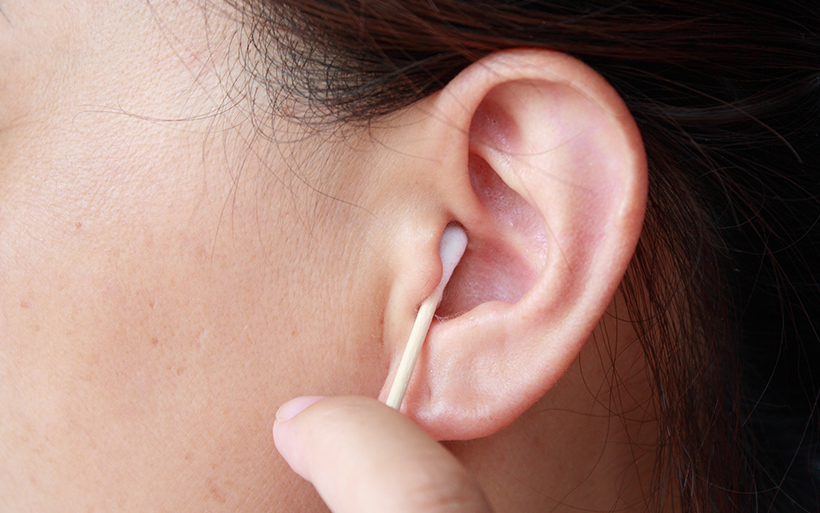
Numerous people make the error of trying to extract a perceived blockage themselves using probes or household items. Regrettably, these can push wax deeper and exacerbate the situation.
Medical specialists caution that inserting anything less substantial than your finger in your ear can lead to eardrum rupture and severe impaction.
On the flip side, assuming a concern is merely wax when it is actually hearing loss can prevent you from obtaining the help you require to stay engaged.
What to Expect Throughout a Professional Consultation
A specialist can employ an otoscope to instantly see if a mechanical blockage is present.
When cerumen is the cause, clinical irrigation or clinical removal provides instant resolution.
When the ear is clear but sound remains muted, a clinical test is necessary to evaluate your hearing health.
The National Institute on Deafness and Other Communication Disorders (NIDCD) recommends prompt assessment whenever changes in auditory function interfere with your everyday life.
Choosing the Correct Path for Improved Sound Quality
Dampened sound is not a certain marker of long-term impairment.
In numerous instances, cerumen accumulation is the cause, and it’s highly treatable.
Your hearing care team can assist you to find the source of muffled auditory symptoms so you can move forward with assurance and peace of mind.
Please note that home assessment is hardly a substitute for a professional check-up when it pertains to your hearing.
Treating the issue immediately stops the anxiety of the uncertainty and puts you on the path to better hearing.
Instead of guessing what is wrong, book a rapid check-up with our audiologists to get the truth.